Bingham Farms Water Damage Restoration › Basement flooding
Basement Flooding in Bingham Farms
Written by the Bingham Farms Water Damage Restoration Team
Basement water in Bingham Farms comes from a few places: the sewer, the sump, groundwater and storm runoff. Here is what the public record says about Bingham Farms.
Bingham Farms callers see a typical response under 30 minutes. Call once, and a crew is already on the road before you hang up.
Every job carries our written guarantee: we come back and finish the work.
Headquarters in Bingham Farms
Crews for Bingham Farms jobs leave from our local headquarters: 32100 Telegraph Rd, Bingham Farms, MI 48025. The office sits on Telegraph Road, the one road that carries real commercial traffic through the village, so a crew reaches any address in Bingham Farms without leaving that corridor.
Read next: Bingham Farms House Age, Pipes and Basements
Immediate Steps for Your Safety
- Keep your feet dry. Water that touches sockets or cords can shock you.
- Reach the breaker box only over a dry path, then switch the main off.
- Close the tap on every sink, tub, and shower until the drain clears.
- Skip laundry and dish cycles, because both push more water into the pipes.
- Record the scene with your phone camera before you lift or toss any item.
- Phone the municipal sewer office if waste is rising, then ring a cleanup company.
Water in Bingham Farms: What the Record Says
Sewers and Drainage
The Oakland County Water Resources Commissioner operates the sewer system in Bingham Farms, and the county lists the village among its WRC-operated communities. A backup here ties to the county system, not a village public works crew. (Oakland County Water Resources Commissioner, Sewer)
The village's master plan says Oakland County is responsible for the village's water and sanitary sewer. (Village of Bingham Farms, 2021 Master Plan (Giffels...)
The county's sewer page links a basement flooding claim page and a four-part sewer backup video series that explains who is responsible for a backup, the owner or the utility. (Oakland County Water Resources Commissioner, Sewer)
The steepest slopes are in the Rouge River valley, where the land rises up to 25 feet from the deepest part of the valley to the uplands. (Village of Bingham Farms, 2021 Master Plan)
The master plan says wetland soils in the village follow its watercourses. (Village of Bingham Farms, 2021 Master Plan)
The village floodplain overlay follows the FEMA Flood Insurance Study dated September 29, 2006. The village names FIRM panels 26125C0518F and 26125C0519F. (Village of Bingham Farms, Zoning Ordinance (ClearZoning,...)
Common Causes of Backup and Seepage
- Soil water pushes through hairline cracks in basement walls.
- Rain fills the window well, then spills over the sill.
- Roots from nearby trees squeeze into joints of the sewer line.
- Stormwater floods the shared sewer faster than the pipes can carry it.
- Grease or debris clogs the pipe leading to the street.
- Your sump pump quits, jams, or loses its power.
- A high water table lifts moisture up through the slab.
Clues That Water Is Coming
- Toilets bubble or glug after a nearby sink drains.
- Dark liquid creeps out of the basement floor drain.
- A rotten-egg or sour odor drifts up the stairs.
- Paint peels or darkens along the lower wall.
- Rugs and padding feel cold and soggy.
- Windows fog and the air feels heavy.
What Category 3 Means
Cleanup guidelines label water that comes from a sewer as category 3. That label tells the crew to treat everything the water touched as unsafe. Soft materials hold dirty water deep inside, so cleaning the surface rarely fixes them. Most of the time, crews cut them out and dispose of them.
Our Cleanup Process Step by Step
| Stage | Work done |
|---|---|
| Hazard walk-through | Before work starts, a technician scans for live wiring, weak stairs, and fumes. Sewage exposure changes the safety plan, so the crew suits up in gloves, boots, and respirators and marks off the danger zone. |
| Sort the water type | Water falls into three grades: clean from a supply line, gray from appliances, and black from sewers or rising flood. The grade decides which tools, cleaners, and barriers the team picks for the room. |
| Pump it out | Powerful trash pumps empty deep pools, and extraction wands finish thin layers on slab and carpet. Technicians check drains and corners afterward, since pockets of leftover liquid keep feeding odors and mold. |
| Tear out soaked porous items | Anything that acts like a sponge, such as carpet padding, insulation, and lower drywall, gets cut away when sewage touched it. Debris goes into heavy bags and leaves through a protected path. |
| Disinfect surfaces | Concrete, studs, and shelving get washed and treated with an antimicrobial product. Crews work from top to bottom, and rinse or wipe the surfaces so no soil film remains on them. |
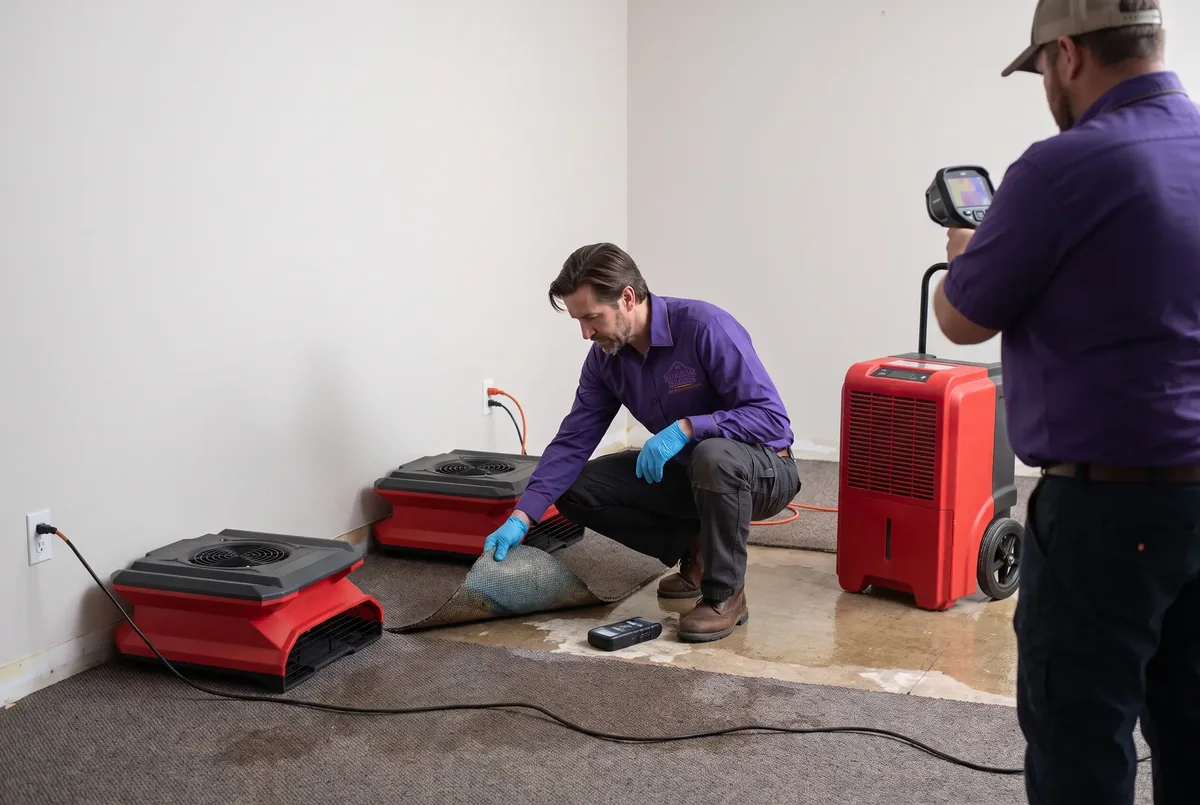
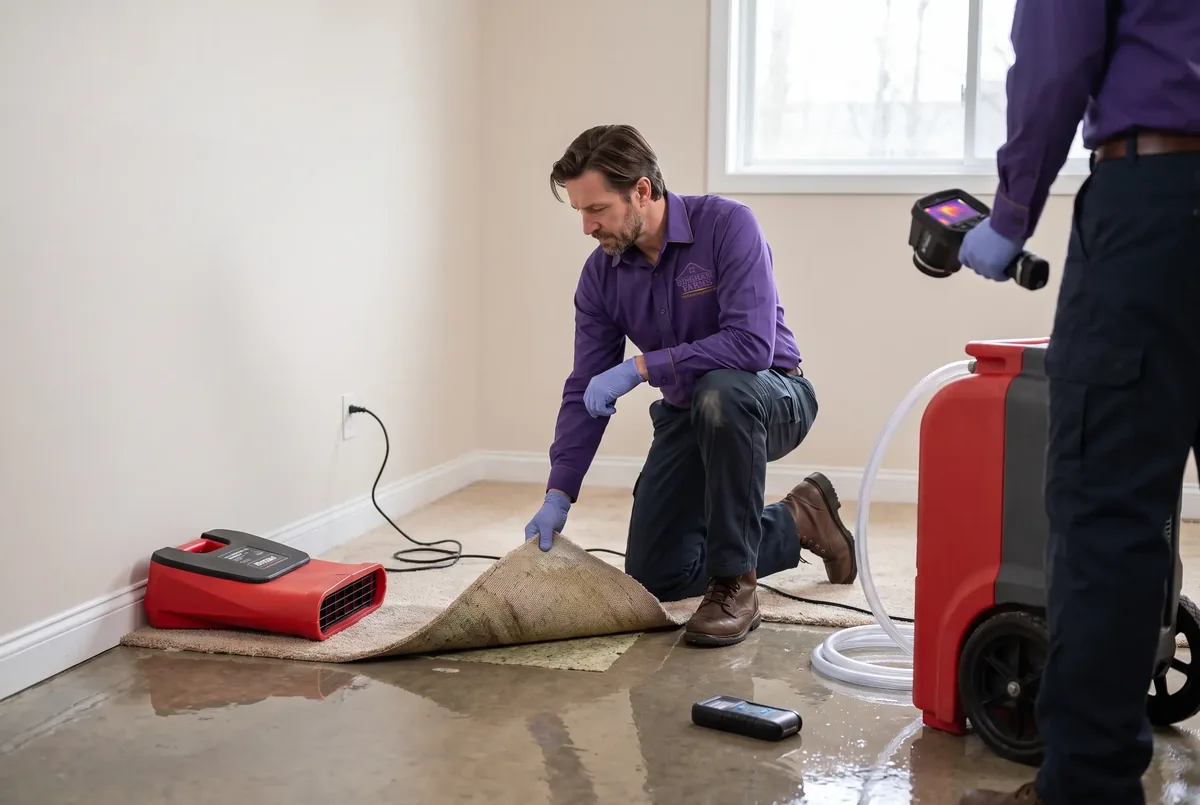
| Dry out and verify | Blowers and dehumidifiers run until a meter shows the structure has returned to its normal moisture level. The crew logs readings from several spots to prove the space is truly dry. |
After the Phone Call
Your call starts with a few simple questions about the water and your home. Next, a crew visits to look at the damage and make a plan. Before work begins, they explain the steps and answer your questions. During the job, they keep you informed about progress and about anything unexpected they find.
Questions people ask us
How risky is sewage water to my family?
Raw sewage can hold germs that cause stomach illness, skin infections, and breathing problems. Children, older adults, and people with weak immune systems face more risk. Stay upstairs, keep pets away, and let trained workers deal with the affected space.
Does homeowners insurance cover a sewer backup?
Coverage varies. Some policies exclude backups unless you added a sewer backup endorsement. Only your own policy can answer this. Read it closely, then call your insurance agent. Share your photos and ask what steps the policy requires.
Should I phone the municipality or a cleanup company first?
Start with whichever call is quicker. Reporting to the municipal sewer office helps if the main line is surcharged, and a cleanup company can start protecting your home. Many people place both calls close together, and that works well.
Is it okay to mop up the mess on my own?
For sewage, hire help. Mops and towels spread contamination, and wet drywall or carpet can hide germs. Without protective equipment and proper disposal, you risk illness and a bigger loss. If you decide to act, wear gloves, boots, and a mask.
What can stop future backups?
Talk with a licensed plumber. Common options: a flap valve, a sump unit that runs on a battery, a camera inspection of the drain line, and root removal. Outside, fix grading so rain flows away, and extend downspouts.
How are sewer backups handled in Bingham Farms?
The Oakland County Water Resources Commissioner operates the sewer system in Bingham Farms, and the county lists the village among its WRC-operated communities. A backup here ties to the county system, not a village public works crew.
Is there water in your Bingham Farms basement?
Call (947) 217-7489, 24/7.
Bingham Farms callers see a typical response under 30 minutes. Call once, and a crew is already on the road before you hang up.
Every call gets a free on-site estimate.
Every job carries our written guarantee: we come back and finish the work.